

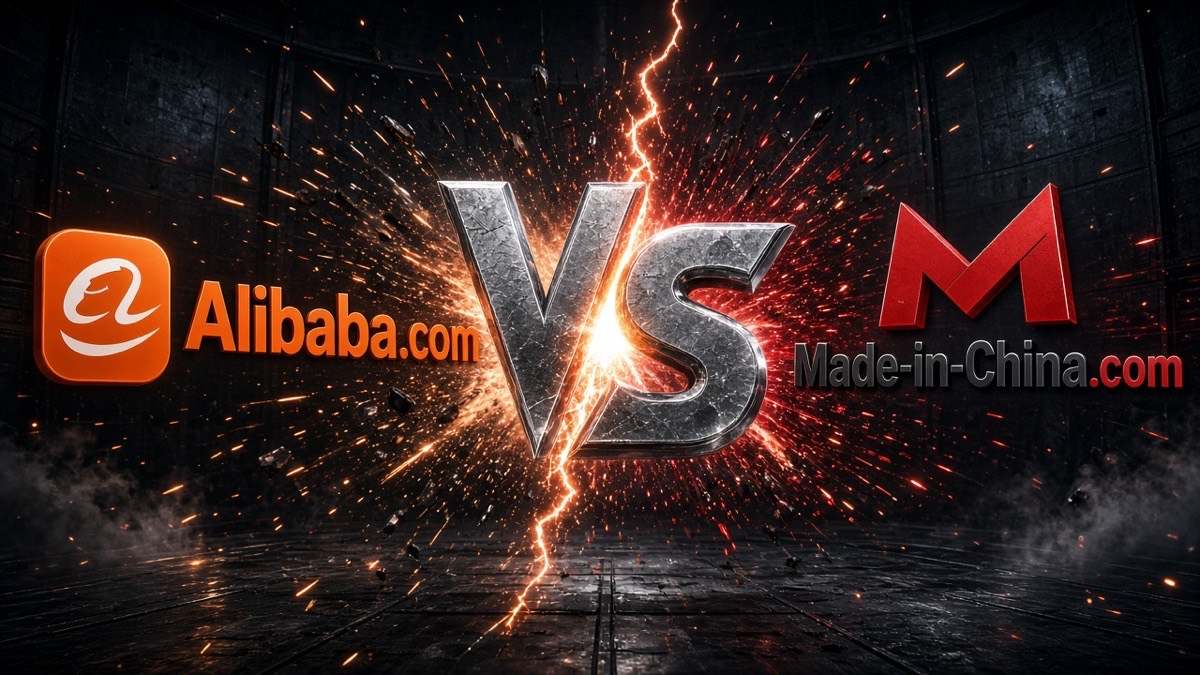
Made-in-China vs Alibaba comes down to this. Search Alibaba first for range. Search Made-in-China second to compare prices and find makers that are only on that site. It is true that some manufacturers are on both platforms, but this is not always the case. Especially factories making technical products, like machinery and equipment, are only on Made-in-China. Search both with the same words. You can compare the prices, products, and everything that matters to you. But don't forget, a supplier profile there does not prove they are the source manufacturer or a reseller.
We search both sites most days, as well as trade fairs.
Made-in-China vs Alibaba at a glance
| Choice | Alibaba | Made-in-China |
|---|---|---|
| Best for first search? | Yes, for most products | Best to expand the search, find more factories, and compare |
| Range of listings | More options on most products. Alibaba has the best range. | Fewer listings for generic products, good range for machinery, technical products |
| Good for | Generic goods, small orders, fast quotes | A second price and other makers only on Made-in-China |
| Supplier types | Factories and trading companies | Factories and trading companies |
| Payment protection | Trade Assurance. Standard claim window is 30 days after delivery. Enterprise buyers get 60 days. | Secured Trading Service. Refund request within 30 days after delivery. Custom goods are excluded. |
Why are there 2 platforms, and what is the difference?
Both platforms are for B2B companies. They connect buyers and sellers. Very simple. Alibaba is the most popular platform for both sellers and buyers. They are the market leader, with the most suppliers and the most active visitors. Even though Alibaba is the market leader, Made-in-China came first. Made-in-China was established in 1998 by Focus Technology in Nanjing. Alibaba was established in 1999 in Hangzhou. Alibaba's strong marketing push made them the market leader. This doesn't mean Made-in-China is useless. They have their own strength. I use Made-in-China daily to find machinery and technical products. A lot of great manufacturers are not on both platforms. Some are only on Made-in-China, especially machinery manufacturers. So it is always best to check Made-in-China too if you are looking for a technical product. Buying t-shirts? You can skip it and use Alibaba alone.
Search both sites with the same words
As I pointed out above, both platforms might have the same suppliers, but a large number of suppliers are only on one of the platforms. So it is always a good workflow to search both platforms. But you need to use the same product words on both sites. Use the same size, material, and quantity. Only then the prices are comparable. In some cases you won't see a shocking difference between prices, but it is still beneficial for you to get an idea of the lower and higher price range.
Keep a simple list:
- Supplier name
- Price and quantity
- Material and size
- The lead time they give you
- Who replied, and how fast
The last point might sound trivial, but the attitude of personnel is very important. If they are dismissive of your inquiry, they will be dismissive of your requests as well.
Read the profile as an advert
A profile is an advert. A paid membership badge means the company paid to sit higher on the page, or to look more trusted. It does not show a clean factory.
Check the page itself:
- Do the photos show real machines and real stock?
- Do the products match what they say they make?
- Does the company name match the name on the quote and the invoice?
- Do they sell a wide mix of unrelated products? That often means a trading company.
Both sites list factories and trading companies. Find out which one you are talking to. The checks are in factory vs trading company.
Check the deal before you send money
On Alibaba, Trade Assurance covers eligible orders and reduces some payment scams. It does not inspect the goods, count the cartons, or test the material. I am not gonna badmouth Alibaba here. Only honest opinions in my blog! Trade Assurance still cannot protect you from bad quality, defective products, and so on. For that, you need someone in China to do product inspections.
A generic order under about $3,000 can stay on Alibaba. The risk of something going wrong is low. And even if something goes wrong, you are only risking 3k. A larger or custom order needs someone at the factory before the shipment leaves China. We can help you manage your entire sourcing process, by the way. On a full job, our fee is 2 to 10 percent of order value. Larger orders sit lower in that range. If you want to learn in depth when I suggest buying from Alibaba and when I suggest hiring a sourcing agent, you can read this post: Alibaba vs a sourcing agent.
Conclusion
Search Alibaba first. Search Made-in-China with the same words. Treat both profiles as adverts. Confirm who makes the goods before you pay a deposit.
Next Steps
If you don't want to handle time-consuming supplier research, or you just don't trust what you see, we can handle the entire China side of your sourcing process. Our team is based in China and we can visit factories to do the inspection on the factory floor, so you always get what you need. We do product research, inspections, and shipping. You can focus on your business back home. We will handle the China side. You can contact us here and tell us what you want to buy. Related reading: Alibaba vs a sourcing agent and factory vs trading company.