


Buyers often ask what a China sourcing process actually looks like day to day, and they usually underestimate all the work that goes into it and the experience needed to produce results. I am running a product sourcing company so I would like to share what I have learned over the years. This post walks through our full process step by step, so you know exactly what happens between your first message and the moment you receive the goods. I will write exactly the steps I follow day to day, but you can follow them yourself if you need. There are no secrets.
Our China sourcing process at a glance
| Step | What you get | What Problem it Solves? |
|---|---|---|
| Product Research | Quotations from different manufacturers. | A product can be manufactured by different factories at different quality classes and price points. Only after determining every difference can you make a final decision. |
| Negotiation and final quote | Written price, materials, packing, specs and timing. | The price you see online is not the final price. You can always negotiate down or add more perks. |
| Factory Inspection (if needed) | Photos, videos, tests, and a report. | Important to find out if you are dealing with a reseller or a serious manufacturer. |
| Product Inspection | Inspection report, detailed review videos, pictures and final verdict. | A product might look perfect on an ad. But only after you inspect it with your hands can you decide if the workmanship and materials are high quality. |
| Shipping arrangement | Quotes from forwarders who focus on your destination, plus one place to pack goods from different factories. | One forwarder's price is not the best for every country. Factories will not consolidate a mixed order for you. |
| Shipping inspection (if needed) | Someone present while the goods go into the container. | Broken goods, a short count, or a loose load that falls apart at sea. |
| Document preparation and handoff | China customs declaration, bill of lading, packing list, and the certificates the destination needs. | Missing papers when the goods arrive, so customs does not clear. |
Step 1: Product Research
After your inquiry we confirm exact specs, quantity, price range, and quality expectations with you. Then product research begins. There are lots of manufacturing bases scattered across China. Similar category products are usually manufactured in clusters. For example Guangzhou is known for the textile and fast fashion industry and Shenzhen is known for the tech industry. But that doesn't mean those products aren't manufactured anywhere else. In fact for a lot of products you can find a cheaper option far away from those clusters as well. Of course if your goal is to find the cheapest. Cheap does not mean quality. That is why it is important to determine what the client wants exactly: best money can buy? cheapest? highest quality? somewhere in between?
Knowledge of these clusters is a great help to find the products quickly. Of course you will be using Alibaba, Made-in-China, 1688, Yiwugo, and so on. I do too. However, knowledge of which product is the highest quality or the cheapest, and where, is very helpful to shortlist the manufacturers. You can't just message 50 manufacturers trying to find the mythical item. That is a waste of time. In my workflow, after I determine what is needed, I know which manufacturers to filter. Then I start contacting them and find out everything about the product. Sometimes this whole step can be skipped altogether because I have already sourced 1000s of products and know the best manufacturers for them. I research fresh if the product is fresh for me too.
Then comes the report. After gathering all the options I prepare a document and send it to you with options. You can choose which product is best suited for your needs. But if you already gave us all of your specs I will directly send you the perfect match.
Step 2: Negotiation and Final Quote
After the product order has been confirmed we start negotiations. You can always get the price lower if there are reasons for it. If you are planning to place repeat orders and you have potential for a higher volume purchase in the future, the manufacturer often makes discounts even for lower quantity goods. But discounts are not guaranteed. It depends on the product.
Then we prepare a quotation for you with commission levels clearly stated and what services you get for that commission, and send it to you. After approval, invoice, contract, and deposit, then work starts. You can read about our pricing breakdown here: China sourcing agent fees.
You can also request a sample and a sample inspection at this step too. We usually get a sample to inspect before the payment as well. But this sample inspection is not the same as Step 4. That product inspection is usually after your product starts being manufactured.
In short, our work is to take all the risk and hard work of China sourcing off your shoulders. You focus on your business. We focus on the China side.

Step 3: Factory Inspections
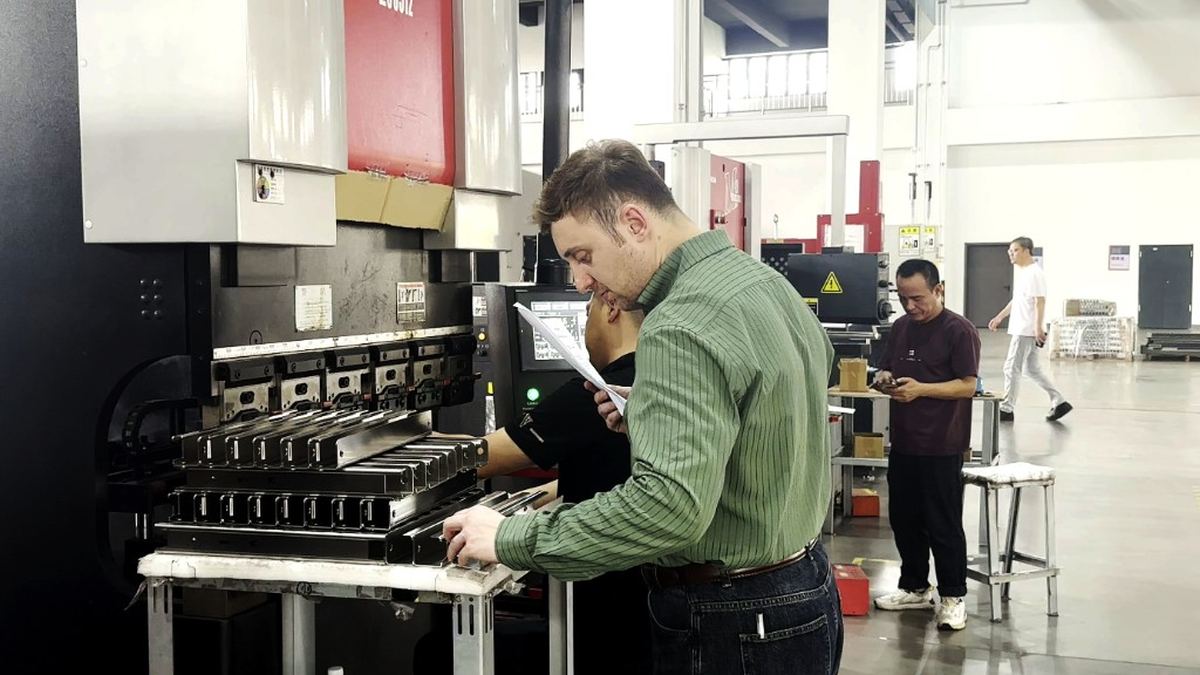
Honestly, factory inspections are not for every inquiry. It depends what you are buying. But factory inspections are always done if the order value is great. We do this to reduce risk for both ourselves and you. The shop might look professional, the sales people might sound world class, but you never know exactly what kind of organization they are part of until you visit the factory yourself. We always do a factory inspection for a large order or complex orders (think of machinery, equipment, and so on). These inspections are not only to confirm that the factory exists but also to confirm what kind of manufacturing processes they use. Is everything vertically integrated? What are the work conditions? Is the manufacturing equipment operating normally, or is it old scrap? There is too much detail. However I will say this: for simple products and small orders this step is not necessary.
Step 4: Product Inspections
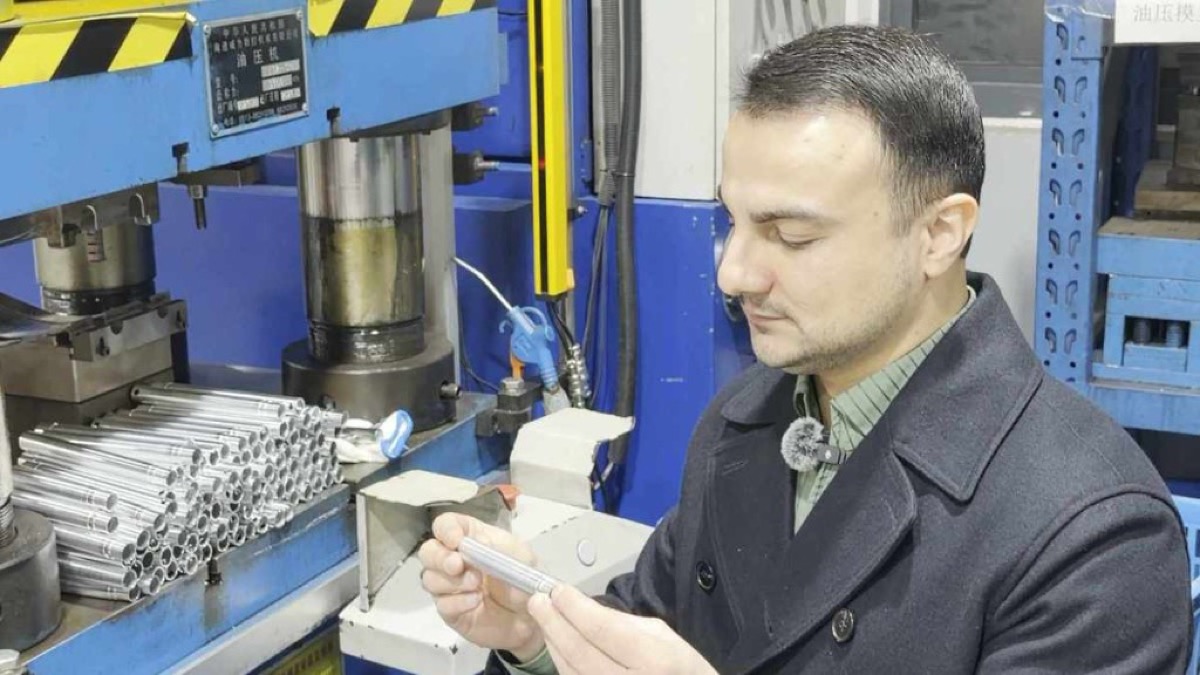
Product inspections are the most important part of a sourcing job. No matter if you are buying a simple product or a complex one, product inspection must be done. Here is how I do it. If the product is not giant (think of 200+ kg or 1 m3), then we ask the manufacturer to ship the goods to our office. After receiving the product we unbox it and review it on camera, just like a tech reviewer reviewing a new product. We keep your written specs and demands right next to it and analyze the product in detail. Does it have high quality materials? Does it look premium? How is the functionality, build quality, and overall feel? This inspection determines what product you will receive. After the inspection we send you the review video and detailed close-up images and tell you exactly the pros and cons of the product. Every item has tradeoffs. You can't get the most premium product for a cheap price. You get what you pay for, so in the inspection report we include those details as well. If you approve the product, those exact specs of the product go into the contract we sign with you and with the manufacturer. So in case something goes wrong during production and some items come out defective, we can enforce the contract and ask them to replace the defective items. Honestly, problems with the quality are very common, especially if you are purchasing a cheap product in volume, because keeping consistent quality is hard for manufacturers of low-cost items. That is why this step cannot be skipped. Of course you can do this yourself too, but shipping will take longer to your country and resolving disputes will be troublesome and time consuming too. Better that you outsource this step to a sourcing agent (me!!!).
Step 5: Shipping Arrangement
If the manufacturer you are dealing with has export experience, then they will certainly offer you a shipping option as well. But these manufacturers work with one shipping forwarder and their prices are not the best for every destination. There are 1000s of shipping forwarders in China. Each one of them has a destination they focus on and has optimized their costs for that destination alone. I don't mean they can't ship everywhere. They usually can, but my point is not every destination they quote for will be cost optimized. For example one forwarder can quote $100 to destination A and $200 for destination B, while another forwarder can quote $200 to destination A and $100 to destination B, even though what they do is exactly the same.
We always get quotations from the forwarders that are specialized in certain destinations, such as central Asian countries, Europe, the USA, and so on. In this way we can make sure the shipping cost is the most optimal. In this way you will not only save on the shipping cost itself but also on the customs fees and taxes in the destination country, because those fees are calculated proportionally based on the CIF cost of your product, in other words the cost of goods plus shipping.
Another important point is you won't always purchase from one manufacturer. In fact 90% of my client base buys different products from different manufacturers. The warehouses those factories ship from are scattered across the 4 corners of China. You will still need somebody to consolidate everything, pack it properly, and send it to the shipping company. A manufacturer will not do that for you, and most shipping forwarders will not either. It is just too much work. This is also one of those steps I suggest you delegate to a sourcing agent. It will be very risky and hard for you to do from home.
Step 6: Shipping Inspection
This step is also not necessary for every shipment. If you are buying a simple item in low quantity, the shipping and loading inspections are not needed. However, as soon as the volume increases to a container level, or the product you are sourcing is sensitive or fragile, you need to get the shipping inspection done too. A shipping inspection is basically somebody being present while your product goes into the containers. We do this for large and important orders all the time. What this inspection solves is simple: we make sure the people loading the containers don't break anything, the quantity is correct and nothing is missed, and they load everything properly so the items also don't fall off and break during transportation. Oceans are not always peaceful (honestly they never are). Therefore the loading should be tight enough that nothing gets damaged during the storms container ships go through.

Step 7: Document Preparation and Handoff
This is the last step of the sourcing process and it sounds simple, but it is not. After the shipment is loaded we handle the customs declaration in China. We get every document you need to clear customs in the destination country, such as the bill of lading, customs declaration, packing list, and so on. Then we put them together with other documents and send them to you. The total number of documents always changes based on the product and the destination country. You might need quality certificates, technical spec sheets, country of origin, CE, RoHS, and more. We prepare and send them all to you so you can clear customs smoothly.
Conclusion
Even though product sourcing sounds simple in writing, the actual process is very complex. There are 100s of things that can go wrong and many details to keep in mind to ensure a smooth process. I have been sourcing products for years and I still deal with problems every day. It is part of the job. You can follow these steps above yourself. I didn't keep any secrets. However, sourcing is very time consuming, hard, and risks are involved. Keep in mind, if you are not in China yourself, some of these steps will be impossible to do from far away. On the other hand, you don't need a sourcing agent for every purchase, which I have also written about here: do you need a China sourcing agent.
Next Steps
We can handle the entire China side of your sourcing process so you can still source products without flying to China. You focus on your business back home. We will handle the China side. You can both save time and transfer all the risk to us, professionals. Contact us now and tell us what you need. Consultation is completely free. You can also read a breakdown of our pricing here, or go straight to our pricing page.


