

Hiring a China sourcing agent is easy. But finding a reliable one is harder. Most buyers start with a Google search, a LinkedIn message, or an Alibaba “sourcing service” badge. But recently social media discoveries are also popular. I would say finding a sourcing agent through social media is better than a simple Google search since there is a face attached to the business. However, one type of data point is not enough to decide if the product sourcing company is the one that you're looking for. This guide is the checklist we wish every buyer used before they wired a deposit to anyone, including us.
How to choose a China sourcing agent at a glance
| Gate | Keep them | Walk away |
|---|---|---|
| Do you need one | Large, custom, or technical order | Generic Alibaba order under about $3,000 |
| On the ground | Chinese company, recent factory visits, a named inspector in China | Stock photos, or an office at home with "partners in China" |
| Fee | 2 to 10 percent in writing, factory price you can check | A very low fee with no visits, no inspection, or a factory kickback |
| Money | Balance after a passed inspection | Full balance before anyone checks the goods |
Decide If You Need an Agent at All
You need a China sourcing agent when the order is large, custom, or technical not for small generic Alibaba orders under about $3,000.
Before you compare agents, decide if you need one. I will start this blog by honestly telling you that you might not actually need a product sourcing company to source goods from China. I know this might sound counterintuitive since we are a product sourcing company but it is always better to tell you the truth beforehand rather than making dishonest money. If you are buying a generic product and the total order is under about $3,000, you can often handle it yourself on Alibaba. Reviews, Trade Assurance, and a simple sample usually cover that level of risk. We wrote the full honest version here: do you need a China sourcing agent.
You need a team on the ground when the order is large, custom, or technical. That is when a bad factory choice, a swapped material, or a missed inspection turns into a container of useless products. The rest of this post assumes you are in that second group.
Proof They Work on the Ground in China
A reliable China sourcing agent can prove a real Chinese company, recent factory visits, and who inspects your goods before shipment.
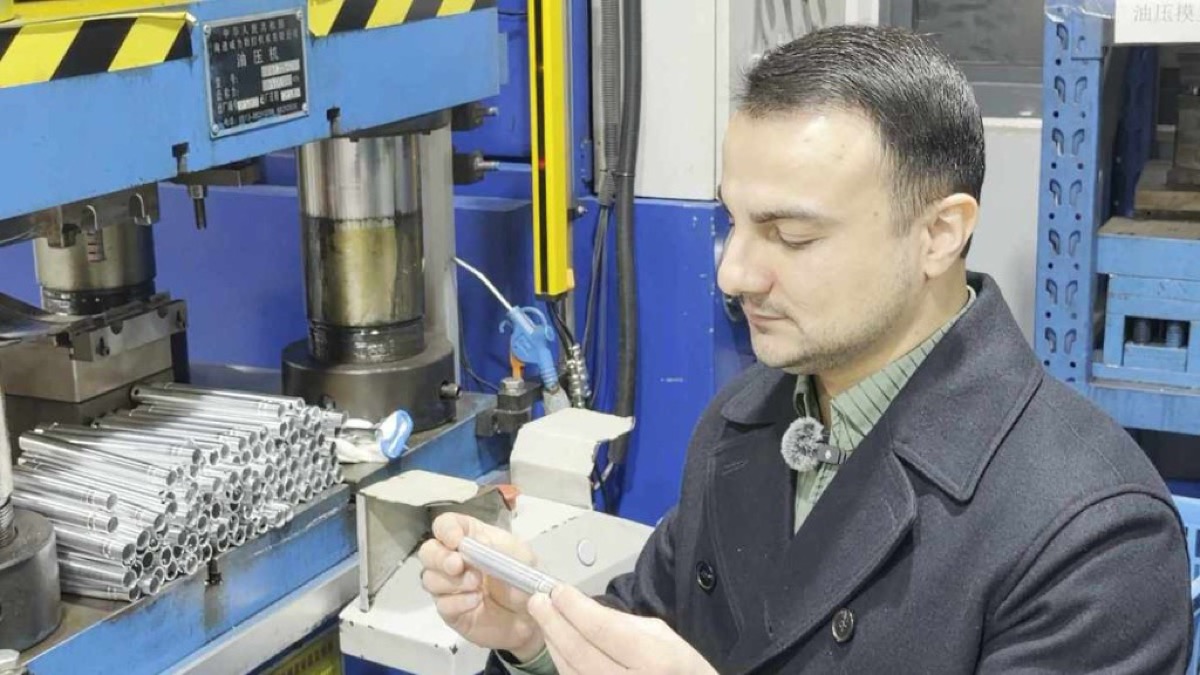
A reliable agent has a real address, a real team, and a real way to walk a factory floor. Ask for:
- A Chinese company name and business license you can verify
- Photos or video of recent factory visits for products like yours
- Who will inspect your goods, and where they are based
- How fast they can visit a plant if something goes wrong mid-production
A website with stock photos and a WhatsApp number is not proof. An office in your home country with “partners in China” is also not proof. The team and the company must be based in China. You want someone whose job is to show up at the factory when your money is at stake.
If they cannot explain who visits plants, who speaks Mandarin with the factory, and who signs off on quality before shipment, keep looking.
Fee Transparency Before You Commit
Ask for written fees, visible factory prices, and what the percentage covers before any work starts.
A clear fee model removes a lot of stress. There are a lot of sourcing companies that keep the real factory prices secret. They might tell you they only charge 2% of the total order, but if the factory prices are kept secret from you, then you have no way to verify that claim. Fortunately, current technology is making it harder to hide the real prices of the products. If you're suspicious, you should verify it by writing to different manufacturers on Alibaba. Or you can use this tip to build trust between you and the sourcing company. If the real price of the goods they give you matches what you got from the manufacturers on Alibaba, that company is doing honest work. Additionally, ask for the percentage or fixed fee in writing before any work starts. Ask what it covers: supplier search, negotiation, samples, inspections, and export paperwork. Ask what it does not cover: tooling, third-party lab tests, or courier samples.
Typical China sourcing agent fees sit in a 2 to 10 percent range of order value. Larger orders sit lower in that range. If someone quotes a fee that looks too low, ask what they cut. Cheap often means no factory visits, no inspection, or a kickback from the supplier. That last one is common. If the agent’s income depends on the factory, they do not work for you.
For a plain breakdown of how fees work, read China sourcing agent fees and our pricing page.
Inspection Before the Balance Payment
Pay the balance only after a passed inspection against your specs never after photos alone.
This is the rule that protects your money. The sequence should be:
- Deposit to start production
- Production and packing
- Inspection against your specs
- Balance payment only after a pass
- Then shipment
If an agent pushes you to pay the full balance before anyone checks the goods, walk away. Defects are cheap to fix in China. They are expensive after the container sails. A reliable agent treats inspection as a gate, not a nice-to-have photo report after you have already paid.
Ask who writes the inspection checklist. It should come from your specs.
Start Small Enough to Learn
A trial order tests communication, quality, and lead time before you scale to a large MOQ.
A good agent is fine with a trial order when the product and factory are new to you. A trial is not free consulting. It is a smaller first run that proves communication, quality, and lead time before you scale.
Honestly, when a client tries to place a large order, I personally do not accept. I always tell them to start small. This business is built on trust and this goes both ways. Moreover, since in our company we charge a relatively small sourcing fee, it is in our interest that whatever client purchases brings them success so we can continue working long-term. That's another reason that I never advise clients to start their business with a big purchase. By starting small, you can judge the quality of the work as well as build trust.
Watch how they behave on that first order. Do they send clear updates? Do they push back on weak factories? Do they show you real quotes with named plants? Do they say no when a quote looks wrong? Speed matters, but so does honesty. The agent who always says “no problem” is often the one who discovers the problem after your deposit is gone.
If they refuse any trial and push you straight into a large MOQ with a full deposit, that is a bad deal. Serious work can start small and grow.
Red Flags That Mean Walk Away
Walk away if fees are vague, factory prices stay hidden, or the agent pushes full payment before inspection.
Use this list as a hard filter. One red flag is a warning. Two or more means stop.
- They will not share a Chinese company name or license
- Fees are vague, or they “decide after we find a factory”
- They earn money from the supplier and from you
- No plan to inspect before the balance payment
- They only communicate through one chat app and refuse email or a contract
- They promise the lowest price in China with no process behind it
- They discourage factory visits or video from the floor
- They pressure you to pay fast with urgency language
A reliable agent removes risk. They do not sell urgency. They explain the process, the fee, and the inspection gate in plain language.
What “Reliable” Looks Like in Practice
A reliable agent puts fees in writing, inspects before balance, accepts trials, and walks away from bad factories.
Put the pieces together. A reliable China sourcing agent:
- Helps you decide when you do not need them
- Can prove on-the-ground work in China
- Puts fees and scope in writing
- Inspects before you pay the balance
- Accepts a sensible trial when the risk is new
- Walks away from bad factories instead of forcing a deal
That is the job. Find factories, manage the relationship, catch problems early, and keep the process moving so you are not stuck waiting weeks for answers.
Conclusion
Hire an agent for a large, custom, or technical order, and only after they can show a China company, a written fee, and inspection before the balance. A small generic order under about $3,000 can stay on Alibaba.
Next Steps
If you want a straight answer on whether your order needs an agent, contact us or review pricing. For cost detail, read China sourcing agent fees. For the honest threshold on when to skip outside help, see do you need a China sourcing agent. To vet suppliers before you hire anyone, read factory vs trading company in China and China factory quality control.