

Buyers ask us about OEM vs ODM in China all the time, and half the time they are already calling a catalog product "our OEM." That mix-up is expensive. Private label vs OEM is the same mess at a lighter level. The factory hears one thing. You meant another. Then nobody knows who owns the mold, who owns the risk, or why the sample keeps bouncing.
Here is how we actually sort it on the floor.
OEM: your design, your wait
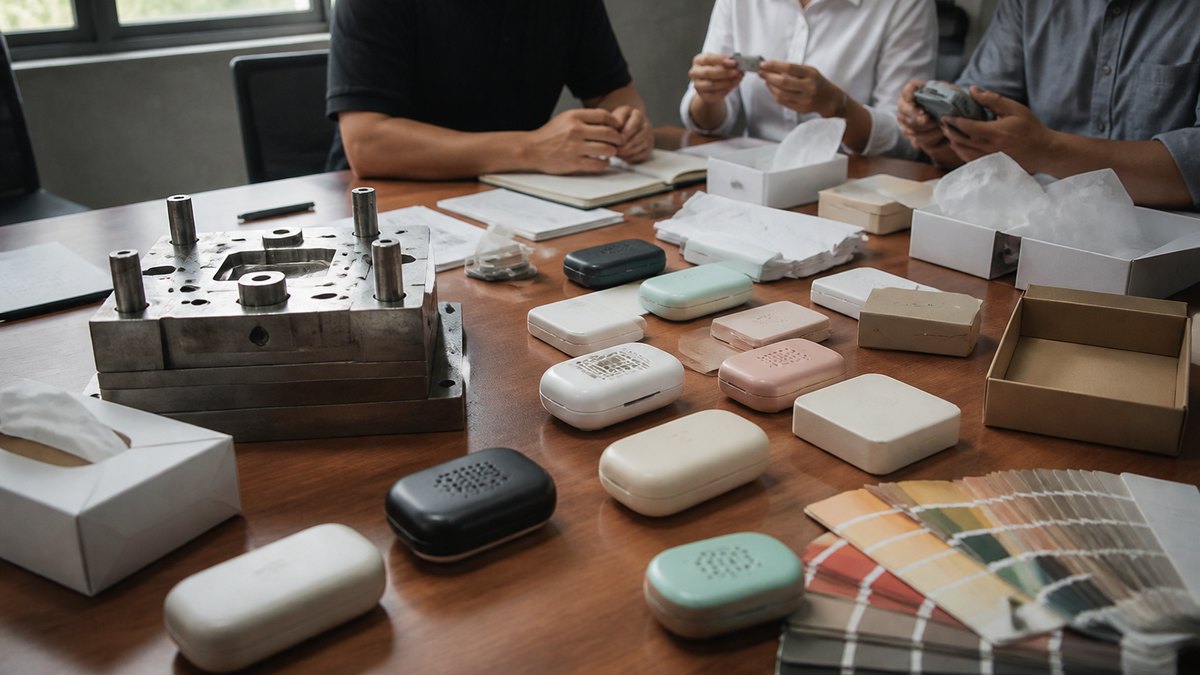
OEM means the factory builds to your design. You bring drawings, materials, tolerances, maybe a physical sample. They quote a mold or fixture if the part needs one. MOQ goes up. Sample rounds take time because the plant is not running this product every day.
You pay for that wait with money and calendar. What you get back is control. Fit, safety, branding, the weird detail that makes the product yours. If those cannot drift, OEM is the path.
A weak spec still gets misread. OEM does not fix that. We see the same "lost in translation" problem on custom manufacturing every month. The only version of OEM that works is a tight written spec plus someone in China checking samples against a golden sample, not mailing every round home and losing a month each time.
ODM: their platform, your brand
ODM starts from a product the factory already knows how to make. You pick a base model. You change color, logo, accessories, maybe a short list of functions. You are not inventing the mechanism. Samples move because the tooling and the process already exist.
That is why people like ODM. It is also why the product is less unique. A competitor can buy something very close from the same plant, or from the next plant over that runs the same platform.
The trap we watch for is materials. The factory already has a bill of materials. If your target price is aggressive, purchasing will try a cheaper grade. The sample looked fine. Bulk is softer, yellower, or fails a drop test. Lock the material list in writing and inspect the first bulk lot. Do not assume the approved sample automatically protects you.
ODM is the right call when you need a working product on a clock and your brand is the real difference. If you need a new invention, that is not ODM.
Private label: a logo on something that already sells
Private label is the lightest path. Same SKU the factory already makes. Your logo, your carton, sometimes your color. No new mold. No new structure.
It is fast. It is cheap to start. It is also the weakest differentiation. Anyone with access to that factory can sell the same goods in a different box.
Use it to test a market when you do not have drawings and you are honest about what you are selling. Do not promise customers a custom product and then buy private label. Calling a catalog item "our design" does not make it OEM. Factories get confused.
What actually costs money
People want a neat ranking. Speed goes private label, then ODM, then OEM. Control goes the other way. Upfront cost sits mostly on OEM because of tooling and extra samples. ODM may still charge for a logo mold or a color change. Private label is mostly packing and MOQ.
None of that helps if the quote mixes unit price, mold fee, sample fee, and packing upgrades into one number. Ask them to split those lines. We will not invent a "standard mold fee" in a blog post. It depends on the part. What we refuse to do is leave tooling vague until production is already running. That surprise shows up in custom work more often than it should.
How we pick with a client
If you have unique drawings or a unique mechanism, it is OEM. If you need a proven product with your branding and a few changes, it is ODM. If you only need your name on a stock item, it is private label.
Unsure? Take the lightest path that still matches what you told your customers. Then run the same process either way: write the spec, approve a sample, inspect, produce, inspect again. The label does not replace that sequence. It only changes how much you invent versus how much you adopt. Our step-by-step is in how our China sourcing process works.
Next steps
If you want help picking a path and managing samples in China, contact us or see pricing. For custom production, read custom manufacturing. For the workflow around samples and inspections, see how our China sourcing process works.

