


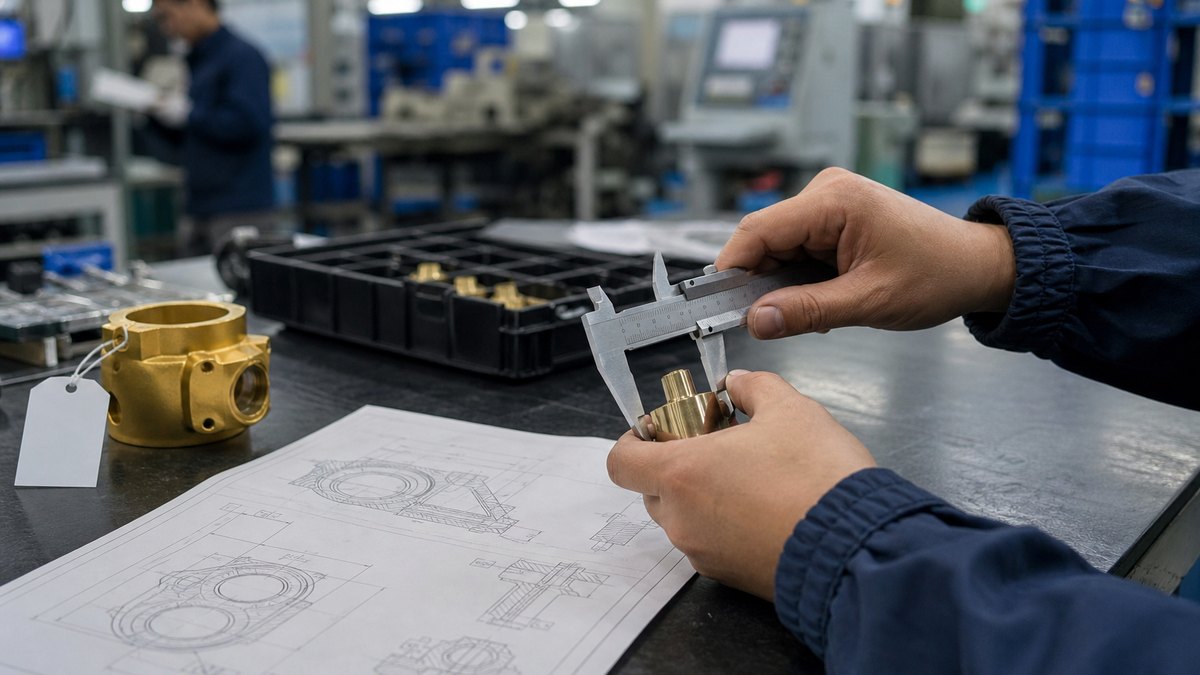
The OEM spec sheet is the file that your entire project is manufactured from. Salespeople can say yes in chat. But, they dont always send the same spec sheet to the production team. They rewrite it in their own language which sometimes miss small details. Production often opens a thinner PDF than the one you approved. If a something is missing, production crew fills it with a guess, and then the plant can tell you they followed the paperwork.
We spend a lot of days fixing mistakes that were already written down somewhere. They just never made it into the file the line used.
Why a factory misreads a weak spec
Plants run many orders. Workers rotate, shifts change and context on the product is lost. A salesperson agrees to your drawing. Production opens a shorter file. Specs get lost in translation. Materials get swapped and nobody messages you. Swaps still happen with a tight spec. A team in China can point at a page instead of arguing from memory. See why you need a team in China.
Write short lines with numbers and photos so the person on the floor can measure without asking the salesperson. One product per sheet if you can.
Name the material or purchasing will pick a cheaper one
Do not write "good quality plastic" or "metal like the photo." Name the family and the grade, such as ABS, 304 stainless, or 40s cotton. Add thickness, weight, or density where those numbers change the product. Call color with Pantone, RAL, or a physical chip. Be as precise as possible. Put the finish on the sheet as well, including gloss, texture, coating, and print method, plus what they must not swap to hit a price.
A photo gets you the look. Purchasing can still swap the resin inside. Wrong materials look identical in a picture. That is how a cheaper polymer ships inside a perfect-looking shell.
Say so on the sheet when the material is expensive. If a cheaper substitute is acceptable, name that substitute and the test still has to pass. Purchasing will treat a blank line as permission even when you did not mean it that way.
Keep a golden sample in China
"As per sample" only works if the sample is in the building. Write the dimensions that make the product fit or fail, and put a tolerance on each one. Add weight if weight is part of what the buyer is paying for. Add the function tests you care about, including open and close cycles, charge time, and load. Mark what is reference only so nobody treats a marketing sketch as a tool drawing.
Photograph the golden sample, number it, and leave one with the factory and one with whoever inspects. When bulk drifts, you compare to that numbered piece. You cannot inspect from a Zoom recording.
If you mail every sample home, you lose about a month per round. Catch the miss in China.
Packing belongs on the same sheet
Skip inner packing, carton size and strength, labels, barcodes, or shipping marks, and the factory will use whatever is on the line that week. This is more important than you think. Beacause your customers will see the product box first which will create their first impression. So make sure you get it right.
Say how each unit is bagged or boxed, how many units sit in an inner box and in an export carton, and what the carton is made of. Fragile goods need a drop or crush note. Label copy needs a language and a placement. Barcodes and SKU rules belong there too, along with shipping marks for destination, PO, and carton number of total.
Bad packing is how good products arrive damaged. Wrong labels are how your warehouse slows down. Neither problem looks urgent when the factory is rushing to close the order.
One master spec, same checklist on the floor
Photograph the golden sample from every side, including the side nobody puts on a listing. Get a logo and print close-up, plus a material close-up where a swap would hide. Shoot packing at unit, inner, export carton, and mark. Include any accessory or spare that must be in the box.
Turn those lines into a pass or fail list. That list is what we take to the floor. The spec sheet and the inspection sheet have to say the same things. Custom manufacturing is this loop. We translate the spec, push sample rounds, and inspect bulk against the approved sample.
If two documents disagree, production will pick the easier one. Keep one dated master spec. When you change a line, change the date and tell the plant what changed.
Next steps
If you want help turning a product idea into a spec a factory can build, contact us or see pricing. For sample and production management, read custom manufacturing. For why the check has to happen in China, see why you need a team in China.

